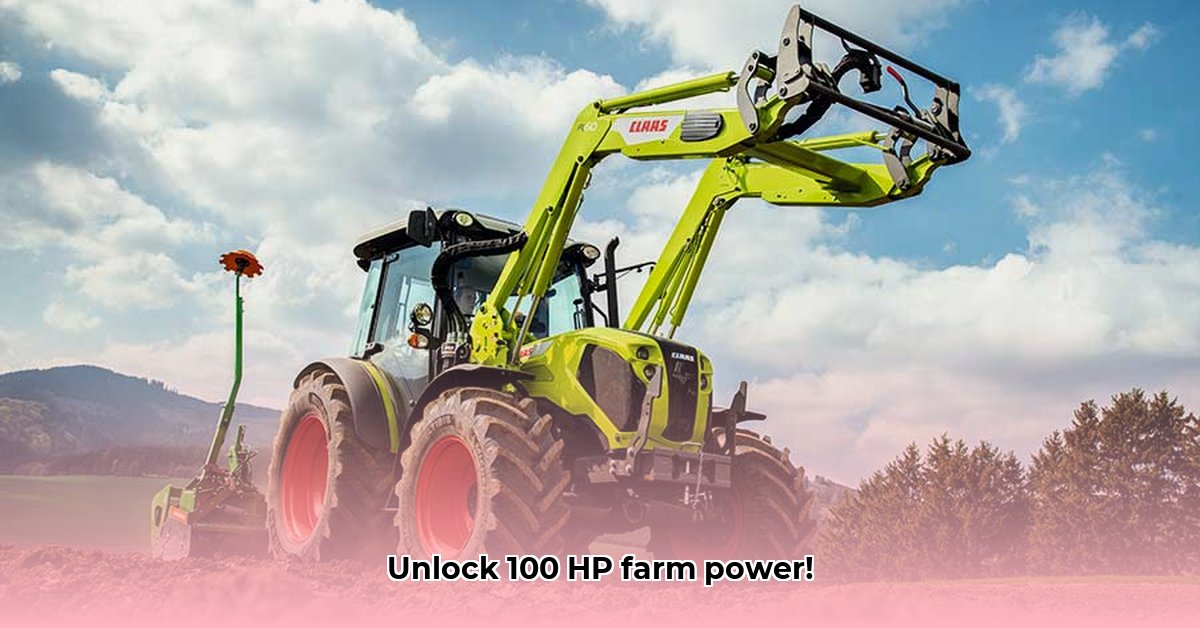
The Claas 100 hp tractor represents a significant advancement in agricultural machinery, promising increased efficiency and productivity. However, its environmental impact remains a critical area for assessment. This article critically examines Claas's sustainability claims surrounding the 100 hp model, analyzing its technical specifications, conducting a comparative analysis (where data permits), exploring its lifecycle assessment (LCA), and offering actionable recommendations for various stakeholders. For more information on Claas tractors, visit the Claas Tractor page.
Technical Specifications and Sustainability Features
Understanding the Claas 100 hp tractor's sustainability requires a detailed examination of its key features. The engine is paramount. While precise fuel consumption data (liters per hectare) isn't publicly available for direct comparison, Claas highlights fuel-efficient engine technology and an intelligent transmission system designed to minimize fuel usage. Independent verification of Claas' claims is needed to assess real-world fuel efficiency. Further information on the engine's emissions profile (including both direct and indirect greenhouse gas emissions) is also unavailable, hindering a complete sustainability assessment.
Beyond the engine, Claas emphasizes ergonomic cab designs, suggesting improved operator comfort leads to increased productivity and reduced resource waste. However, this benefit is only one piece of a much larger puzzle. The tractor's overall environmental impact depends heavily on fuel efficiency, greenhouse gas emissions, and the complete lifecycle of the machine.
Sustainability Assessment: Fact or Fiction?
Claas markets the 100 hp tractor's efficiency and versatility, but these marketing assertions require substantiation through quantitative data. How does it compare to competitors in terms of fuel savings and greenhouse gas emissions? Currently, a direct comparison is difficult due to insufficient publicly available data. While Claas promotes technological advancements, concrete evidence is necessary to validate these claims. For example, a lack of detailed emissions data (direct and indirect greenhouse gases) throughout its operational lifespan limits a comprehensive comparison. This lack of transparency makes a robust assessment concerning Claas' sustainability claims incredibly difficult.
Lifecycle Assessment (LCA): A Missing Piece of the Puzzle
A comprehensive evaluation of the Claas 100 hp's environmental impact demands a thorough lifecycle assessment (LCA). This encompasses the entirety of the tractor's lifespan: manufacturing, materials, transportation, operation, disposal, and recycling. Unfortunately, this critical LCA data is currently unavailable, making a holistic sustainability judgment impossible. This lack of transparency is a significant concern. Without a comprehensive LCA, any conclusion regarding sustainability remains incomplete and speculative. The need for industry-wide adoption of standardized LCA reporting is apparent.
Actionable Recommendations: Paving the Path to a Greener Future
To improve the sustainability of the Claas 100 hp and the agricultural industry, several actionable steps are crucial:
For Claas:
- Transparency: Publicly release detailed fuel efficiency and emissions data for independent verification and comparison.
- Public LCAs: Conduct and publish comprehensive LCAs for all tractor models, ensuring complete transparency.
- Innovation: Invest heavily in R&D of alternative fuels (biofuels, hydrogen) and automation technologies.
- Sustainability Reporting: Publish an annual sustainability report with detailed data and measurable targets.
For Farmers:
- Data-Driven Decisions: Demand detailed sustainability data from manufacturers before purchase.
- Total Cost of Ownership: Factor in long-term fuel and maintenance costs when assessing tractor purchases.
- Precision Agriculture: Implement precision agriculture techniques, optimizing resource usage and minimizing waste.
For Governments and Regulators:
- Emission Standards: Enact stricter emission standards for agricultural machinery.
- Mandatory LCAs: Mandate LCA reporting for all agricultural equipment.
- Financial Incentives: Offer grants and subsidies to encourage adoption of sustainable technologies.
For Researchers:
- Independent Studies: Conduct comparative studies on environmental impacts of different tractor models.
- Long-Term Sustainability: Investigate long-term sustainability of various tractor technologies.
- Synergistic Practices: Explore how sustainable farming practices and automation can enhance sustainability.
Conclusion: The Imperative for Transparency
The Claas 100 hp tractor presents potential benefits, but its sustainability remains inconclusive due to a lack of comprehensive data. Transparency in reporting fuel efficiency, emissions data, and comprehensive LCAs is crucial for responsible agriculture. By demanding more data and supporting research, we can drive the agricultural machinery industry toward a more sustainable future. Further research and data transparency are urgently needed.